Archive | December, 2015

30 Before 30: Watch “The African Queen”

30 Dec

In my 30th year of life, I’m attempting to do 30 new things. Full List Here. All Bucket List Adventures Here.

This is the first Christmas I have ever spent in New York City. I don’t have family here, so I instead spent the day with a couple of friends. In the afternoon we went to the IFC center to see “It’s a Wonderful Life.” It felt like a very New York City Christmas-y thing to do, and I had only seen the movie once before, so watching it again felt new to me.

Overall, it was great. But I had one major hang-up that bothered me. The whole montage of what the world was like without George Bailey in it. Sad, horrible things. His brother is dead. His uncle is in an insane asylum. Some of his friends are homeless. But the climax of this scene is what happened to his wife, Mary, if he had never been born. She NEVER MARRIED. Tragically, she ended up a librarian instead. This is the worst fate. Worse than the dead, the insane, the destitute. God forbid a woman not marry.

I tried to enjoy the rest of the movie, but I sat stewing over Mary’s fate. Maybe she was happier not being married! She could have married Sam if she wanted to! Maybe she LOVES her library job! She’s only in her early 30’s, that does not an old maid make! These thoughts sat with me for the rest of the weekend. I understand the movie was made in a different time for women, but it wasn’t that long ago.

So Sunday night, I watched “The African Queen.” The story of a missionary (Katherine Hepburn) in Africa in the early 1900’s. The German army burns down the village where she is living whilst her preacher brother dies. She has no choice but to join up with a riverboat captain (Humphrey Bogart) to head down the river to another life. Obviously they fall in love, and what a romantic little boat ride they have. Leeches, mosquitoes, rainstorms. Somehow it is romantic though. And Hepburn’s character discovers the strength and the bravado inside herself. She comes up with a plan to navigate the boat through white water rapids, build homemade torpedoes, and ram them into a German ship in an effort to exact some revenge. She’s a fucking badass.

I loved the romance that evolves. I loved the odd couple that Hepburn and Bogart make. I loved that old-movie, quick-talking dialogue. But I kept thinking about poor old maid Mary from the “It’s a Wonderful Life” alternate universe. That Mary would have been in her mid-30s. The Hepburn character was in her mid-40s. It gave me comfort to know that old maid Mary wasn’t done for. She could still end up in Africa. She could still find love in Humphrey Bogart. And let’s face it. As much as we all love Jimmy Stewart, Bogart would be so much more fun to date and obviously be better in bed. I love Katherine Hepburn. I love how stubborn and strong and confident she played her characters. I love that during a dark time for women, she existed and she fought to play these kind of women. She was a fucking badass.


Don’t Hate on Nonfiction

28 Dec
nonfiction-wordle

Originally found here.

When friends ask me for a book recommendation, I’m really really good at it. I love reading and have a wide range of types of books that I read, and I have a knack for picking books for people that they will like. I take into account what I know about them as a person, as a reader, what their interests are, and I pick books that they end up loving, devouring. I wish there was a career there. A Reading Consultant. Much like a therapist, my clients could come in and describe their lives and their reading hangups to me, and I would guide them to a world of books that they never knew existed, a reading utopia. I wonder how much I could charge for that?

I was at work the other day talking with two of the veterinarians. Dr. L was about to take a week off from work to relax and spend time with her family on Long Island. She lamented to me about how she doesn’t take pleasure in reading anymore. In her undergrad, she was a dual major in Biology and English. The English major part of her feels guilty that she never reads anymore. She asked me for some book recommendations.

“What aren’t you liking about the books you’ve tried reading?” I asked her (see what a good Reading Consultant I am!)
“I get bored with the plots and find myself not caring. I end up skimming through huge chunks of the books trying to find the point. Med school ruined the way I read. I’m always trying to find the facts.”
“Then maybe you need to be reading Nonfiction.”
Both Dr. L and Dr. N gave me ick faces.
“Nonfiction is so horrible and boring,” Dr N said.
“Not the right kind of nonfiction! I love reading nonfiction. You just have to know where to find the non-textbooky nonfiction. Didn’t you love ‘Brain on Fire‘?” I asked Dr. L.
“I couldn’t put it down. It’s one of the best books I’ve ever read.”
“There you go. That’s nonfiction. And with all the fucked-up tv and movies you watch, I bet you’d love true crime books. Have you ever read ‘Helter Skelter’ or ‘The Stranger Beside Me.'”
“I feel guilty. The English major in me feels like I should be reading works of literature.”

“You’re not in school anymore,” I told her. “No one gives a shit if you are reading Madame Bovary or Anna Karenina. If you miss reading, just read whatever book you enjoy. You don’t have to force yourself to read classics.”

I believe that the majority of people who don’t read regularly or who say they don’t like reading are suffering from a form of PTSD from being forced to read boring, shitty books while in school and college. Some people suffer more than others. I understand that there are important classics that society wants the younger generations to be familiar with, but our school systems seem to be doing more harm than good in forcing literature on children. Not everyone is going to love Shakespeare or Milton or Emily Dickinson. And I think forced encounters with writers make people want to never read again once they are done with school. And I think the genres that suffer most are Short Stories, Poetry, and Nonfiction.

Nonfiction can be dull and full of research and works cited, or it can be exciting and strange. The old adage, stranger than fiction, is talking about nonfiction. When strange things happen in fiction, it’s easy to criticize them as a reader and say, “That would never happen.” In nonfiction, it’s all real and you find yourself saying “I can’t believe that happened!”

So I honestly believe that anyone who isn’t enjoying reading should start off my giving nonfiction a shot. I recommended “A Kim Jong Il Production” to Dr. L and when she came back from her vacation she gushed about how much she loved it and couldn’t put it down. See! Highly-acclaimed Reading Consultant Chrissy Wilson, at your service.

Some of my most-loved nonfiction titles:

  • The Boys in the Boat: Nine Americans and Their Epic Quest for Gold at the 1936 Berlin Olympics by Daniel James Brown. A book that doubles as a narrative of poor depression-era men at the University of Washington and describing the evolution of 1930’s Nazi Germany propaganda. The back and forth of the narrative works, and the characters are rich and endearing.
  • A Little Book of Language by David Crystal. For the word nerd, this book is a quick read about the nature of language and linguistics, how we learn language and how we use it.
  • Zeitoon by Dave Eggers. The story of a man from New Orleans who remained in the city during Hurricane Katrina. It documents the hurricane, the aftermath, and the way he was treated by government officials. It’s unbelievable that this sort of thing happened in America, and it shows how out-of-control American xenophobia (especially toward Muslims in the post 9/11 era) can be. Dave Eggers also wrote “What is the What,” another great nonfiction book documenting the immigrant experience.
  • The Peaceable Kingdom: A Year in the Life of America’s Oldest Zoo by John Sedgewick. A must-read for animal lovers. This is a perfect example of a nonfiction book that isn’t out to teach anything, just to tell the true story (more like stories) of people who work in an unconventional field.
  • Bird by Bird: Instructions on Writing and Life by Ann Lamott. If you’ve ever wanted to write, if you have ever felt trapped in a creative dead-end, this is the book that most every writer alive today has read and continues to turn to. It’s an inspiration about how to write and about how to live, which to writers is often the same thing.
  • Spook: Science Tackles the Afterlife by Mary Roach. I love books by Mary Roach because they are informative and digestible. She takes a big subject (in this case death) and writes quick chapters that describe the scientific approaches over the years to understand these topics. She talks about seances, the attempt to measure the soul (21 grams), angels.
  • Under the Banner of Heaven: A Story of Violent Faith by Jon Krakauer. Another master of nonfiction, this book is about the history of the Mormon church. A classic example of a book where fact is stranger than fiction. It culminates in descriptions of fundamentalist Mormons. Important proof that all religions are prone to extremists and bad interpretation.


3 Lessons I’ve Learned in 2015

26 Dec

2015 New Year celebration

I’ve always been a huge fan of New Year’s Resolutions. I’ve figured that the key to good resolutions is in the specifics. You can’t say “Be healthier.” It needs to be something trackable like “Eat a salad once a week” or “Work out twice a week.” I’m not one to lecture on these things, though, since I only went one-for-five on my resolutions this year. But I made significant progress toward the other four, so that’s a start!

I read somewhere on the inter webs this week an article a girl had written about her lessons learned over the year. I can’t for the life of me find it, but the idea of it stuck with me. It’s not enough to set goals moving forward, we also have to look back and choose what lessons we take with us.

I’m surprised at how hard I had to stew in my thoughts to figure out what are the things I’ve learned this year. Of course, there were a million mini-revelations like finding the right shade of lipstick for my pale skin tone and just how much money I save by packing lunch (so much money!). But I turned to my diary to recap the year and see if there were any grander life lessons to be gleaned.

LESSON #1: TRUST THAT GUT FEELING

In the relationships of my past, I spent a lot of time trying to make things work, hoping things fell into place. I’d make excuses about timing and how things can develop. But as I get older, I realize that voice inside of me that quietly whispers, “This ain’t going to work” shouldn’t be ignored. I’ve always been open to giving someone a chance, but at some point, you know. You know in your heart of hearts that this person isn’t YOUR person. This was the year I decided I was done with settling for anything less than amazing. It saved me time and heartbreak and saved the lovely people I dated time and heartbreak to accept that moving forward wasn’t going to work. It wasn’t a set of deal-breakers or standards that I set. It was trusting my heart when it told me to move on.

LESSON #2: A NIGHT IN IS A VALID AND ACCEPTABLE OPTION

I love going out with my friends. I love trying new things and meeting new people. But for a long time I measured my life by how amazing my nights out were. And if I found myself home without plans on a Friday or Saturday night, I almost felt like I was in a panic. What did that say about my life? I’m in my twenties, shouldn’t I be out on the town having adventures? Is my life as exciting as those I see on Instagram?

When I was a senior in high school, I had an odd falling out with my best friend at the time. We stopped talking, and I was ostracized from my social circle. I spent months with nothing to do on my weekends. So I started going to music shops and book shops alone and buying NME magazine, the New Yorker, Harper’s. I’d spend my evenings listening to Brit Pop, the Velvet Underground, David Bowie. I’d read my dorky literary magazines and write for hours in my diary and other notebooks. I eventually made new friends who have remained some of my closest friends to this day. The point is, I used the time alone on my own to grow, to give time to things that I loved and was interested in. I brooded on existential questions about what I wanted out of life and I made collages of cool bands from the magazines I read.

I loved those nights, and I’ve brought them back. I treasure my nights in reading, writing, cooking, studying. I learned to stop caring about whether my life is as glamorous as it could be.

LESSON #3: INVEST IN SMALL KINDNESS

Here’s a key to instant happiness: do something nice for someone else. It doesn’t have to be big. I got paper valentines for my girlfriends in February. I bought my friend who was having anxiety issues a small book about breathing and introductory meditation. I tried to smile and be as nice as possible to cashiers and waiters. No matter what. Even on my worst days when I curse the city, the subway, the weather, the smells, the everything. In fact, those are the days when I needed it the most. By smiling and making a genuine effort to be kind, I found that the kindness was mirrored right back to me. It didn’t take much to make my forced smile become a natural one. If I made a stranger’s day better, so be it. If I reminded friends and family that I love them and appreciate them, that’s great! Being kind to people is never a bad idea.


30 Before 30: Read “The Year of Magical Thinking” by Joan Didion

23 Dec

yearmagicalthinknig

In my 30th year of life, I’m attempting to do 29 new things. Full List Here. All Bucket List Adventures Here.

I read this book in the span of a day. It’s not a long book, and the prose is quick and simple. It’s also a story that pulls the reader in. It documents the year of her life after her husband John died. He had a heart attack in front of her, and, as she puts it, in an ordinary moment her life changed.

I’m still processing how I feel about the book. It’s different from most anything I’ve ever read. Death and loss are not new topics. I think the difference with Didion is that she doesn’t try to pull at your heartstrings. She doesn’t conjure up lost memories of her husband and her at their happiest. Their first kiss. Sweet things he did for her. None of that is there. It is simply the story of her mind coping with the grief.

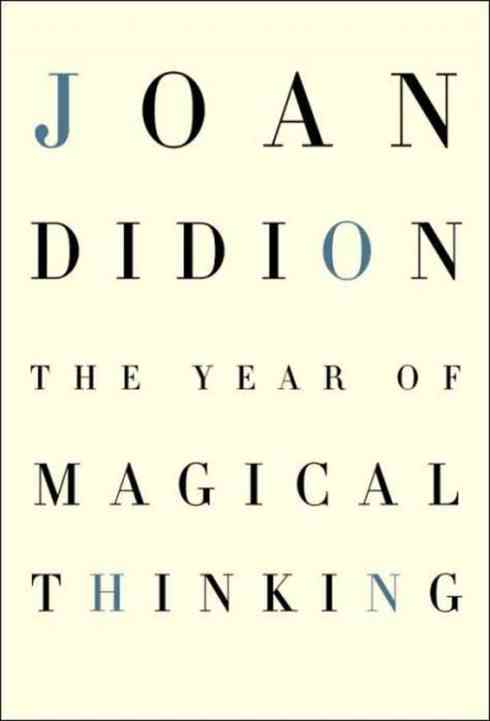
Reading her analyze her mind and notice her thought patterns in the year after she lost her husband pulls the reader closer to understanding how it feels to lose a life partner. At one point, I took a break from reading it and looked at the simple layout of the cover. Only four letters in a different color than the rest. My eyes scanned from the J to the O to the H to the N. John. Her ex-husband. I give that cover designer enormous credit for putting together such an understated cover that describes the essence of the book. The shadow Didion’s husband cast over her life, especially in the year after he died, was unavoidable and seeped into her mind in curious ways.

Her writing is so straight-forward and without embellishment that I was surprised by how much her love for him resonated. In interviews, she has said that she thought the book turned into a love story instead of a story about grief. And I agree. This is not a book for the faint of heart. Your heart will break alongside hers. But it is beautiful, and it is important, and I learned so much from it.

“We are not idealized wild things.

We are imperfect mortal beings, aware of that mortality even as we push it away, failed by our complication, so wired that when we mourn our losses we also mourn, for better or for worse, ourselves. As we were. As we are no longer. And as we will one day not be at all.”


The Problem with Ernest Hemingway

21 Dec
6049c48905722b132f943fb8bf9b187d

Great Hemingway writing quotes here.

Young girls around the world adore Marilyn Monroe. They wear her image on their shirts, on purses. They quote what she said about beauty and self-confidence, only to find out later that she never actually said those things. The problem is that huge swathes of these girls have never even seen a Marilyn Monroe film, some of her fans can’t even name one. I’m friends with a couple of people like this. I try not to judge them, though, because in my world (the world of writers and readers), we do the same thing to Ernest Hemingway.

I love Ernest Hemingway, but he is the Marilyn Monroe of writers. Most anyone who reads or writes will profess a deep, holy love toward him, often citing him as their hero. My journals are full of his quotes. I’ve watched “Midnight in Paris” more times than I can count. I’ve read every fictional and non-fictional thing written about him. I even once had a beta fish that I named Ernest. But my big confession is that I don’t actually like the majority of his books.

I’ve read the major ones and could give a brief summary of the plot lines. I know why he is one of the most important writers of the 20th century: his razor-sharp, journalistic prose. But it’s not my thing. I like descriptions. I like being pulled into a scene with imagery and metaphors. And I’m not a fan of war, which is a huge part of most of his books. The one book by him that I adore is “A Moveable Feast” which was published posthumously. I see it as a departure from his iconic prose. He indulges metaphor and description. He gushes about Paris without much restraint. Or maybe his prose was easier to stomach when he wasn’t talking about battlefields and soldiers. Maybe I need to reread “A Farewell to Arms”?

You see, I carry so much guilt at not loving Hemingway’s books as much as I think I should. I carry a lot of his advice on writing and life around with me as comfort. And I wish I had the grace of his prose, which he admittedly attributed to being able to revise and discard. He reminds me of that perfect guy that you just don’t fall in love with. He’s handsome, smart, loves animals, loves you, but something in the chemistry is amiss and you can’t, despite your most valiant attempts, feel love for this person. I want to love Hemingway. I sorta love Hemingway. Just not in the way he deserves to be read and loved.

I think he’s an easy person to idealize as a writer. He traveled the world, transformed literature, had wild love affairs, wrote important pieces about things that he cared about. But another parallel can be drawn between his fan base and Marilyn Monroe’s. When people idolize Marilyn Monroe, they conveniently forget that she had crushing insecurities, that she suffered through an abusive relationship, that she was addicted to sleeping pills and might have even taken her own life with them. Hemingway, likewise, struggled with depression and took his own life. One of his oft-quoted lines is one that I downright hate.

“Happiness in intelligent people is the rarest thing I know.”

I can’t abide that. I think it is a harmful and mean thing to say. I don’t think happiness is a reflection of intelligence as much as it is a reflection of a mindset. I think people are really and truly happy when they turn their mind to it. Some of the most beautiful pieces of art, music, literature have come out of dark times and sad people, but I think some of it has come from happy individuals. I think about this quote a lot when I am happy and worry that my writing will suffer for it. He’s bullying me into choosing either happiness or intelligence, when I think that it is possible to choose both. And maybe that’s what pushes me away from his novels. This overarching gloom of war and death and failure doesn’t inspire me as much as his love and excitement and happiness in Paris. That’s the part of his writing that means something to me.

So instead of ending this on a criticism of the patriarch of modern writing, I’ll end it on one of my favorite quotes from “A Moveable Feast.” A quote that makes me want to quit my job and move to Montmartre. To find my own mustachioed Hemingway and while away the hours debating back and forth about politics, love, happiness, writing. No matter how I feel about some of his books, the man could craft an elegant sentence.

“You belong to me and all Paris belongs to me and I belong to this notebook and this pencil.”

Am I alone in this? How do other people really, honestly feel about Hemingway? Love him, but don’t like him? Are there other authors out there that have that type of relationship with their readers?

Sylvia Plath and Aziz Ansari

19 Dec
tumblr_mszffxLABu1rzlgoko2_1280

From the amazing zenpencils.tumblr.com

I have been watching Aziz Ansari’s new Netflix show “Master of None.” I’m a huge fan of his comedy, and the show doesn’t disappoint. He’s one of those comedians that manages to be hilarious while remaining smart and thought-provoking. He’s unafraid to mix silly humor with humor that requires a modicum of intelligence. In the season finale (won’t give anything away), his father quotes Sylvia Plath’s “The Bell Jar.” Aziz’s character goes to a bookstore and reads a section of the book while thinking about his life.

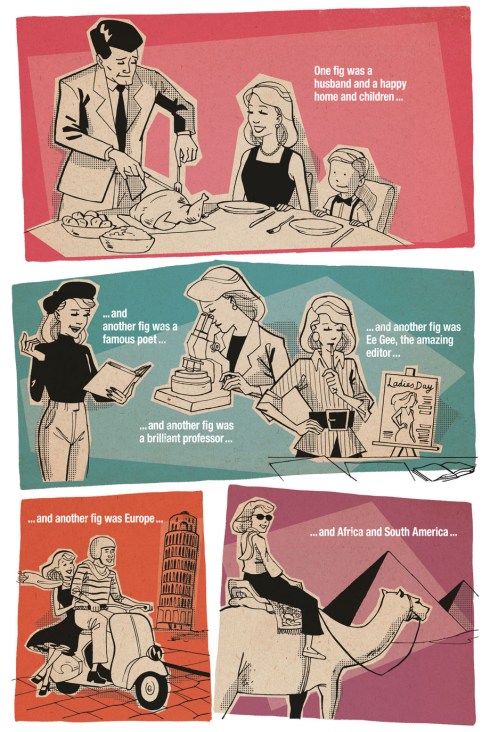
“I saw my life branching out before me like the green fig tree in the story. From the tip of every branch, like a fat purple fig, a wonderful future beckoned and winked. One fig was a husband and a happy home and children, and another fig was a famous poet and another fig was a brilliant professor, and another fig was Ee Gee, the amazing editor, and another fig was Europe and Africa and South America, and another fig was Constantin and Socrates and Attila and a pack of other lovers with queer names and offbeat professions, and another fig was an Olympic lady crew champion, and beyond and above these figs were many more figs I couldn’t quite make out. I saw myself sitting in the crotch of this fig tree, starving to death, just because I couldn’t make up my mind which of the figs I would choose. I wanted each and every one of them, but choosing one meant losing all the rest, and, as I sat there, unable to decide, the figs began to wrinkle and go black, and, one by one, they plopped to the ground at my feet.”

I love Sylvia Plath. And I love “The Bell Jar.” In college, I was obsessed with the book like so many millions of women of the age when life is a giant abyss before you with too many questions and too much uncertainty. I only learned years later that it was a cliche to be a young woman who loves Sylvia Plath. So even though I had read the book a half-dozen times, nodding along to every poetic sentence that seemed to dig into my heart, I stopped talking about it. I didn’t want to be that girl. The one that wears black and thinks big, dramatic thoughts about life and feminism. The Sylvia Plath fan who had likewise gone through sad times in life and felt inspired by the poets ability to channel it into beautiful words, poems, stories.

But I am that girl. The book remains one of my favorite because of passages that speak so directly to what it feels like to live in this day and age. I think the above quote is so apt for so many young people’s lives. It wasn’t long ago when people chose their profession usually by what their family did, what business their parents pushed them into. You worked where you apprenticed. You did what the community needed. Now we live in a global community with new levels of equality never seen before, especially for women. And these choices can be overwhelming. I know in the last couple of years I’ve considered veterinary school, law school, med school, speech/language pathology, writing, editing, web design. We are told to not settle, to find our true passion.

I don’t think that means certainty, though, and this is what Plath is speaking to. I envy my friends who decided what they wanted to be at 8-years-old and are now doing it. For the majority of us, though, I don’t think that’s the case. I think we, like Sylvia Plath, see hundreds of possibilities before us and are taught to wait for which one magically sings to us. But in this waiting, we let opportunity slip by. This quote got me thinking about choosing a fig, about just grabbing one. I’d argue with Plath that choosing a fig doesn’t mean that there are no other chances to choose another. After all, she did become a famous poet. But she also became a wife and mother. She took her own life at a shockingly young age, but if she hadn’t, there are plenty of figs that could have been before her. That’s the key to reading Plath. It’s the key to reading a lot of sad, dramatic writing. You can’t read it from within the Bell Jar, from her lens of negativity. You have to read it critically from the outside. Sure, swim around in her beautiful language, but also remember that she was wrong about some things. Reading her writing never depressed me, it always helped me to see anxiety-filled situations from a different lens and to feel less alone in those insecurities.

If you haven’t watched “Master of None,” you should do so as soon as possible. If for no other reason than to support a comedian who believes in quoting a poet on a television show. And you really must read “The Bell Jar.” Maybe even balance the two! Feel the melancholy of Plath and let Ansari cheer you up.

Animal Personalities

17 Dec

About a week ago, I got bit by a cat at work. It was one of the few times where a cat managed to get its teeth into me, and it was the strangest. I’ve been doing this for four years, and I have seen my share of bad cats, and I’ve learned a lot about the behavior to look for in a cat that is getting upset. Other than the obvious hissing, growling, swatting, I watch for the subtle tail flick, the slow movement of the ears to a flatter position, the dilated pupils. But this cat betrayed nothing.

The cat’s name is Gypsy Rose, and she had B.C. written all over her chart, our secret lingo for aggressive animals. It stands for “Be Careful.” But the cat just seemed nervous during this particular visit. So we figured we would handle her the way we do most nervous cats, we’d go slow and keep a close eye on her. Cats love to hide when they are scared or nervous, and a great restraining technique I use is to let them bury their head in the crook of my elbow. So for the entire exam, Gypsy Rose sat still with her head tucked away, secure in her feline head that she was safe and no one could see her. At the end of the exam, after the nail trim, the injections, the abdominal palpation, she brought her head out of my elbow nook, looked at my arm for a second before opening her mouth and biting me. No warning, nothing bad was happening to her. I pulled my arm back and announced to the room that I’d been bit. The veterinarian and other vet tech were incredulous. I was stunned. I thought Gypsy Rose and I were cool with each other. And if we weren’t, the least she could have done is give some sort of behavioral signal that she wasn’t. When we thoroughly checked her record, it seems she had done the same thing to a technician before, bit without warning or cause.

Here’s an unpopular opinion: some animals are straight-up jerks.

I can hear the gasps of shock that friends and family have given me when I say this. “Don’t you love animals, though?” they ask, their eyes wide with bewilderment. Of course I do. You’d be hard-pressed to find a vet tech (underpaid, overworked, smelling like wet dog) that doesn’t adore animals. But we see them every day. Hundreds and hundreds of cats and dogs. I’ve been doing this for years, so I’ve probably even crossed the thousand threshold at some point. And, yes, some animals are jerks.

For all the anthropomorphizing our culture does to animals, to the point of dressing them up, making them the stars of children’s movies, we gloss over the fact that they have a wide range of personalities as well. I think we can all agree that there are a lot of people out there who are jerks. Black, white, christian, muslim, gay, straight, blonde, brunette, bald. Whatever the case may be, jerks can be found in all of these demographics. I believe in the goodness of humanity as a whole, but working in the Upper East Side, I’ve seen my share of people who are downright nasty and selfish.

Animals can be that way too. I love getting to know an animal’s personality. Some are dull, some are curious, some are cuddlers, and some are hyperactive and easily excitable. But this doesn’t mean that they are all perfect little angels. And I’d argue that some of it is genetic. We have a number of lovely owners who had amazing pets. They then adopt a pet who is a jerk. A dog that growls and bites them, that pees on their bed in spite. A cat that claws them, even when they aren’t doing anything to bother the cat.

Of course, though, just like people, I believe animals can change for the better. Even though we have domesticated animals over the centuries, they will always be a different species than us and that much more difficult to understand. We can’t communicate with them as well as we’d like, never able to grasp what exactly they are thinking. I admire training clips I have seen where behavioralists are able to turn a cat or dog’s personality around, but a fair amount of editing goes into these shows. I’ve first-hand seen a lot of these trainings fail and the animal goes on being a jerk.

I don’t know what the solution is with these little sociopaths. I do see that even despite their bad behavior, people still adopt them into their homes and find themselves loving an animal that will not love them back, or maybe they aren’t able to show it. It’s important to not give animals carte-blanche. Cute as they may be, you still have no idea what is going on in their little heads. We have to remember that even the furriest, fluffiest little nugget might just have a dark side.

Whether to reading challenge or not

15 Dec

reading challenge

This has been my third year doing the Goodreads reading challenge, and it will most likely be my last.

I’ve always been a huge fan of lists. To-Do List, 500-best lists, Bucket Lists. So naturally a reading challenge seems right up my alley. The Goodreads reading challenge is as simple as they come. You pick a number of books that you’d like to read in a given year, and you try to read them. In 2013, I succeeded and read 52 after I had set a goal of 50. In 2014, I came up short reading only 49 when my goal was 55. And this year, I’m currently at 44 of 55 and will probably not reach my goal.

The arbitrary thing about this challenge is that I could go into my account and change my goal. A lot of the people I’m friends with have goals of 10 books, 15 books. I’ve surpassed those numbers, and 44 is nothing to scoff at. I like the idea of the challenge in that it pushes me to read more which is always worthwhile. But I’m afraid it was negatively affected my reading habits.

I don’t feel down or unaccomplished for not reaching these goals, because I know exactly why I didn’t make it. Last year, it was the fault of Game of Thrones. This year it’s the fault of Outlander. In their respective years, I decided to read through these series and the volumes are not small or quick. I loved them though, especially Outlander.

jamie fraser

But these series slowed me down. I’ve only read the first three books of the Outlander series, and each one took me about three weeks to get through. The reading challenge was looming over my head, though. So instead of savoring Gabaldon’s descriptions of Jamie Fraser’s fiery locks or the sweet tones of his Scottish accent, I kept thinking to myself, “read faster, get through this, you’re so behind on the challenge.”

At bookstores and at the library, I found myself running away from larger books and favoring large font, shorter books, knowing that I could get through them faster. And I’ve never found myself intimidated my large books before. So instead of the reading challenge pushing me to read more, it only pushed me to read faster, to pick quicker books and shy away from larger tomes. I became so concerned about my numbers and how they stack up. I want my annual number to be better than the last.

The challenge can be a great thing for the right reader, but next year, I’m giving myself permission to read whatever book I want at whatever pace I want. If I decide to swim in the literary lake that is a poetry book, I will do so and not be rushed to meet some number I forced upon myself. It’s all about quality as opposed to quantity after all. Every good reader knows that.

HOW DID YOUR READING CHALLENGE GO? ARE YOU GOING TO DO ONE IN 2016?

Reading Short Stories

13 Dec

This has been my autumn of short story collections. Not for any particular reason other than I had a number of unread ones sitting on my shelf, and I wanted to clear them out. I know a lot of people who buy books at a much greater rate than they read them, and I too used to be one of those people. But I find it satisfying to go through these books and winnow down my collection. I have limited space, and I try to only hold onto the books that mean the world to me. The rest I give away to friends or donate. I do, however, one day want to own a house where all the walls are made of books shelves, but even in that scenario, I want them to be the great books, the ones I wouldn’t hesitate recommending to someone. That requires making sure that the books I own have been read and to commit to not buying new ones until the unread ones have been dealt with accordingly.

20150421_023522

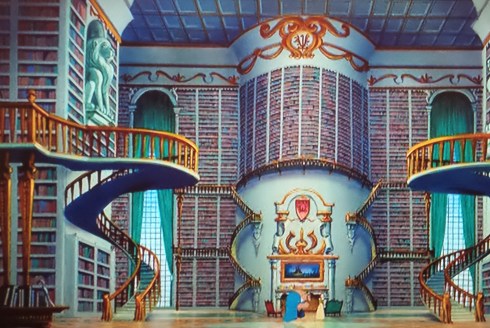
Remember when the Beast gave Beauty this library, and it was the most romantic thing ever, and it set your standards of romance at an unreasonable height when you were still only 8-years-old?

I wholeheartedly believe in the short story as a medium, although it is still one of the most looked over. When I tell people that I’m reading a short story collection, they tend to dismiss the genre either because they think it’s pointless to read something so brief or they’ve never even tried reading short stories, because it holds no interest for them. What draws me to it is the intensity of the story and the language. Short stories, by their nature, have a limited amount of space in which to make the reader feel, grow attached to the characters, and watch them change. Time cannot be wasted in a short story. Novels can be short, long, or painfully long. They can go on wild tangents that have almost nothing to do with the plot and more to do with the author’s political views. I’m looking at you, all 19th century Russian writers. ESPECIALLY YOU, TOLSTOY.

We live in a fast-paced, ADHD society, and short stories are a great option. A brilliant tale with intense images that can be read in 15-20 minutes? It’s the Twitter of Literature. It’s also a great way to get a sampler of the literary scene at the moment. Most mainstream novelists also write short stories and publish them on the side, sometimes expanding them into full-length novels. I do most of my reading on the subway, and I love that I can read about a story per journey. So time-efficient!


BEST AMERICAN

20256561

I’m a fan of all the “Best American” collections. They offer about any genre and do a great job of pulling together a snapshot of the best of what has been published in the previous year. Best American Poetry. Best American Sports Writing. Best American Essays. Best American Mystery Writing. I like it, because it is conscious of literary trends that come and go and offers a good glimpse at what is being put out there.

O. HENRY PRIZE

41DbQxLRgIL._AC_UL320_SR208,320_

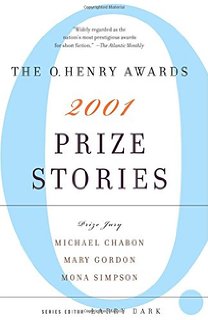
My aunt gave me a couple of these collections years ago for the bus ride back to New York, but I only just got around to reading them. I don’t know why I stayed away so long, honestly. The stories were excellent and tend to come with the most well known authors on the literary scene. Alice Munro, Joyce Carol Oates, George Saunders. I found one or two stories by new writers, but they tend to collect stories from authors at the height of their powers.

PUSHCART PRIZE

Pushcart

The Pushcart Prize is a collection of short story, poetry, and essay that have been published by a small press. One of my first jobs was at a small press in Seattle. Three people in an office space, talking about poetry and living on a tight budget. The collection is known for being ahead of the curve as far as trends and publishers go. They pull together from more well-known literary magazines/publishers like McSweeney’s and Tin House and smaller ones that I would probably not come into contact with other wise, like the Alaska Quarterly or the New Ohio Review.

AUTHOR COLLECTION

bark

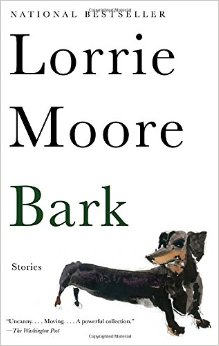
Of course, authors also have their own collections which are fantastic and some of my favorite books. I recently read Lorrie Moore’s “Bark.” Her writing is so cutting and something I aspire to. They’re easy books to buy with confidence, too. Just invest the ten minutes or so at the bookstore to read one of the stories, if you like it, chances are you’ll like the rest too.

30 Before 30: Ride a Mechanical Bull

8 Dec

IMG_3103In my 30th year of life, I’m attempting to do 29 new things. Full List Here. All Bucket List Adventures Here.

Every year my alumni group along with the other alumni groups in the Pac-12 athletic conference rent out a bar in Rockefeller Center across the street from the Christmas tree lighting. We get special tickets that get us past the police barricades and our own special stretch of sidewalk to see the lights of the tree go from off to on. This is my fourth year going and for the last two I’ve stayed in the bar when the tree lights up. It is kind of anticlimactic.

You know what’s also anticlimactic? Mechanical bulls. The bar we rent out is called Johnny Utah’s and, as far as I know, is the only bar in the city that has a mechanical bull. After I had enough Bud Lights in me, and I saw my friend Josh do it, I finally decided to give it a go.

The first time I attempted to ride a mechanical bull was actually eight years ago when I lived in Seattle. I went to a Seahawks preseason game and afterwards went to a dive bar with my friends. They wanted me to ride the mechanical bull they had there, but I kept saying I wasn’t drunk enough. So they bought be shots and beers until I decided I had enough liquid courage to go. As I stood in line with my friend Jess, the room started to spin, and I felt ill. I left the line to ride and told my friends I was TOO drunk to ride it. Needless to say, they were disappointed.

Back to my successful ride last Wednesday, I think my face says it all. I was nervous about getting whiplash or hurting myself (injury-prone lady that I am), so I told them to go easy on me. Alas, I under-estimated myself. I’ve ridden horses through the desert of New Mexico, up steep cliff sides in the south of Spain, along the glaciers of Iceland. This was nothing.  I felt a bit bored and uncomfortable that everyone was watching me. Bull riding also has this weird connotation of being a sexual display which made me feel icky. So after a minute or two, I let myself slip along the side and fall to the mat. Maybe I’d do it again, but I definitely wouldn’t tell them to go easy on me. My inner cowgirl is too strong for that.